
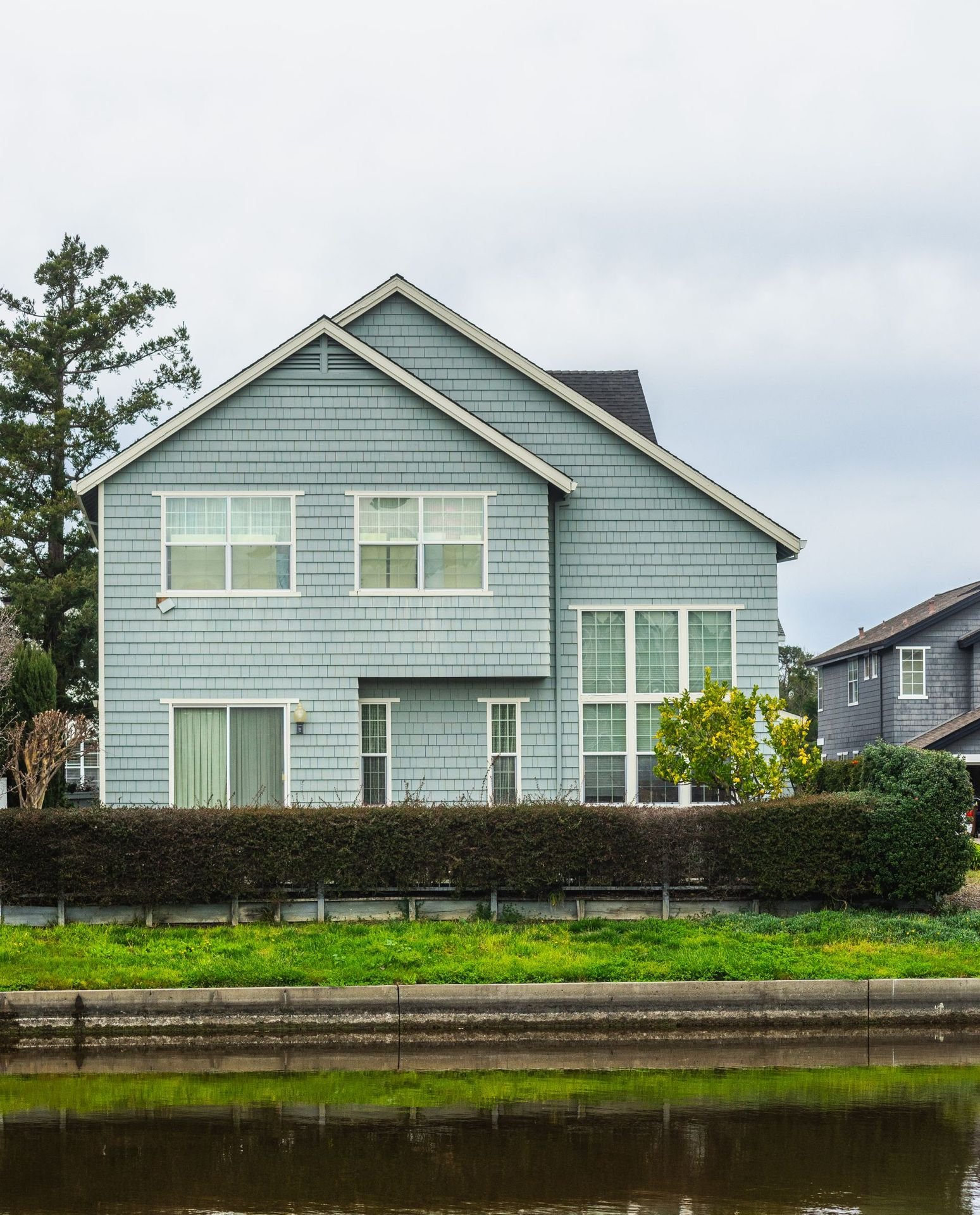

Residential intelligence, scored and mapped.
PlotMetric Residential Intelligence is a web platform that screens residential properties for garden and subdivision potential, ranks the opportunities, and produces clear owner-facing reports, each tracked by a PM- reference.
Finding hidden plots at scale
Many homes sit on larger plots than their owners realise, with garden or side land that could support additional homes. Finding those opportunities usually means hours with maps, title plans, price data and planning constraints. PlotMetric does that screening systematically, so effort goes into the opportunities that are most likely to stack up.
Scattered data, slow judgement
Many data sources
Parcel boundaries, property identifiers, sale history, planning context and environmental constraints all live in different datasets.
Identity & value confidence
Matching a parcel to the right home, and knowing how far to trust a value estimate, is easy to get wrong.
Viability, not just size
A big garden is not an opportunity if access, flood risk, slope, protected trees or planning designations rule it out.
Turning insight into action
Owners need a clear, honest explanation of what might be possible, not a spreadsheet.
A complete screening workflow
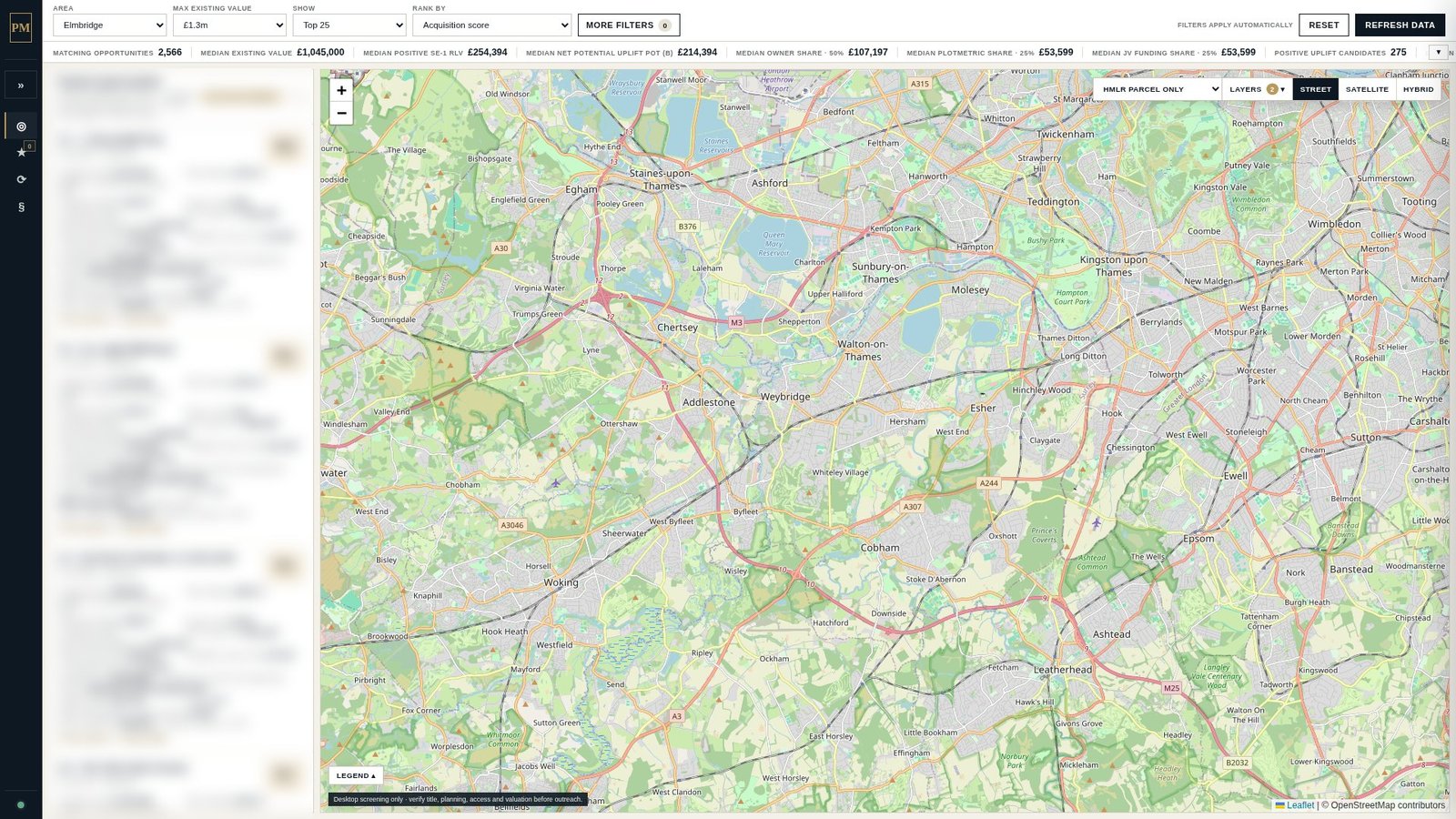
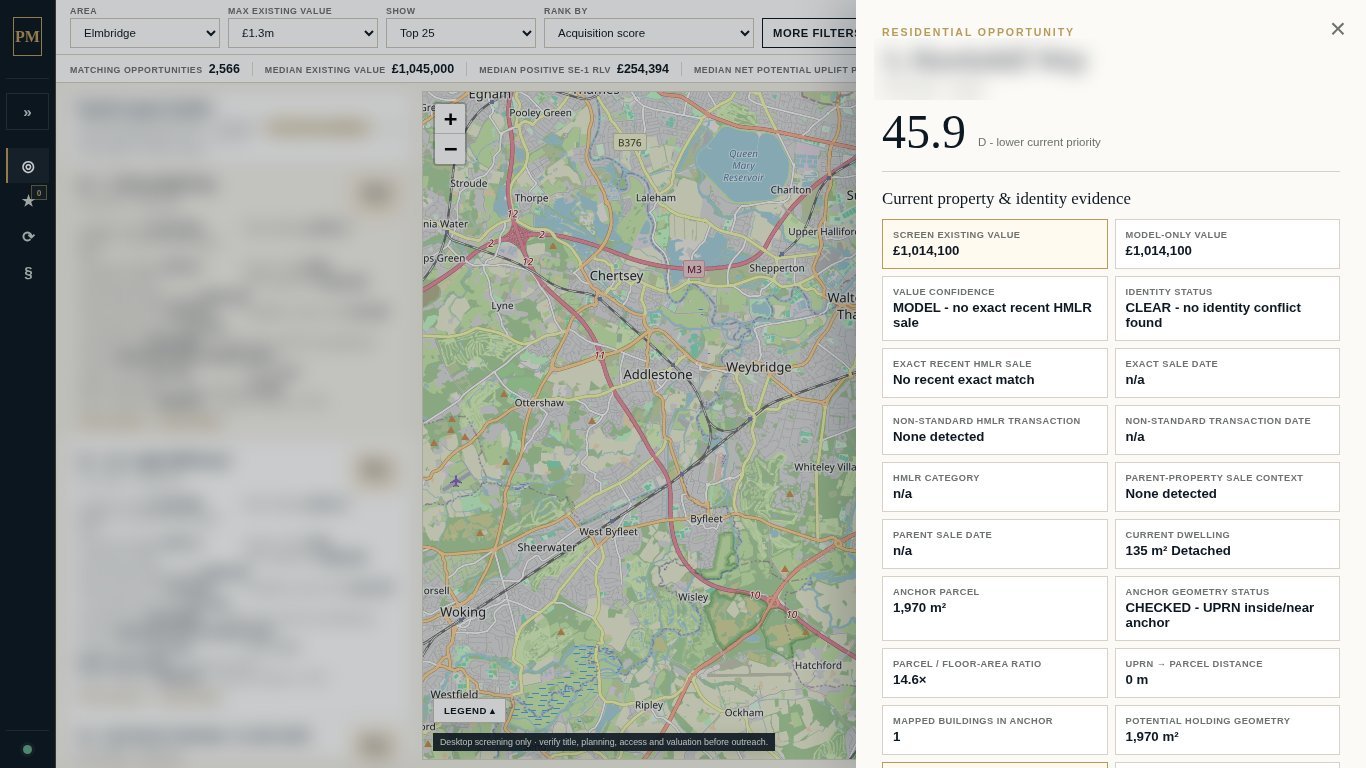
- Data integration & parcel matching: links land-registry parcel geometry, property identifiers (UPRN) and transaction history to each home, with explicit identity and value-confidence flags.
- Development-potential models: estimates potential holding size, possible units and residual land value, with screens for access, surface water, terrain and planning constraints.
- Ranked opportunities: filter by area, value band and ranking method, then review a scored shortlist side by side with the map.
- Evidence drawer: every opportunity opens to the underlying evidence, so decisions are explainable.
- Owner-facing reports: generated documents for homeowners, each carrying a unique PM- reference for tracking from first contact onwards.
- Built-in guardrails: results are clearly labelled as desktop screening that must be verified (title, planning, access, valuation) before any outreach.
Pragmatic, transparent engineering
What it enables
Time goes into the shortlist most likely to be viable, not into manual map-trawling.
Scores come with evidence and confidence levels, so they can be challenged and trusted.
The same rules are applied to every property, version-controlled in a rules registry.
Reports translate analysis into plain language for homeowners.
In one line
A Python residential-intelligence platform that finds, scores and explains garden and subdivision potential, and turns it into owner-facing reports.